AI Voice Technology for Business: What Actually Works in 2026
Here’s something most business owners don’t talk about openly: phone calls are becoming a problem.
Not because customers stopped calling—they haven’t. But because expectations have shifted dramatically. People want instant answers. They want someone (or something) that actually understands their question. And they definitely don’t want to sit through “your call is important to us” for the fifteenth time.
The gap between what customers expect and what most businesses can realistically deliver keeps widening. And that’s where things get interesting.
The Automation Myth That Won’t Die
Let’s address the elephant in the room first.
When people hear “voice automation,” they picture those clunky systems from the early 2000s. You know the ones—press 1 for sales, press 2 to lose your mind, press 3 to speak with someone who can’t actually help you.
That’s not what we’re talking about here.
Modern voice AI is a completely different animal. It doesn’t just recognize keywords and spit out pre-recorded responses. It actually converses. It picks up on context. It knows when someone’s getting frustrated and changes approach.
And no, it’s not trying to steal anyone’s job.
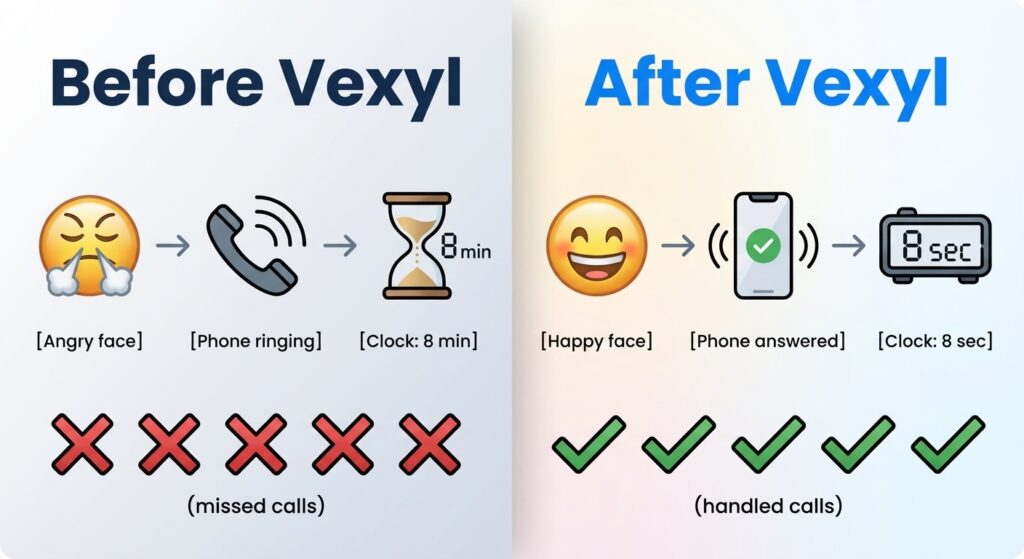
The businesses seeing real results use voice AI as a force multiplier. Their human teams handle the complex stuff—the angry customer who needs genuine empathy, the technical problem requiring creative solutions, the high-value client who deserves personal attention. Meanwhile, the AI handles the repetitive questions that were burning out staff anyway.
One healthcare network we’ve worked with now processes 35% more patient inquiries with the same team size. Customer satisfaction went up, not down. Why? Because staff finally had time to actually care for patients instead of answering “what time do you close?” for the hundredth time that day.
What These Systems Actually Do Now
Forget everything you think you know about automated phone systems. The technology has moved on—significantly.
Real Conversations, Not Scripts
Today’s platforms understand intent, not just words. When someone calls asking about “that thing I ordered last week,” the system doesn’t crash. It pulls up recent orders, identifies the likely one, and responds naturally.
The conversation flows. There are appropriate pauses. The system picks up on emotional cues and adjusts its tone. Callers often don’t realize they’re not speaking with a human until they’re told.
Is it perfect? No. But it’s remarkably close for most standard interactions.
Speaking Your Customer’s Language
Global businesses face a genuine challenge: customers call from everywhere, speaking different languages, expecting service in their native tongue.
Modern platforms handle this automatically. A caller starts speaking Spanish? The system switches to Spanish. Someone prefers Mandarin? Done. French, German, Portuguese, Arabic—the coverage keeps expanding.
This isn’t clunky translation either. We’re talking natural speech patterns, cultural awareness, appropriate formality levels. The difference matters more than you’d think.
Connected to Everything That Matters
Here’s where older systems really fell apart. They existed in isolation—disconnected from your CRM, your booking system, your inventory, everything.
Current platforms plug directly into your existing infrastructure:
- Customer databases and CRM systems
- Booking and reservation platforms
- Inventory and order management
- Payment processing systems
- Help desk and ticketing software
- Messaging apps and communication tools
When a customer calls asking about their order status, the system doesn’t say “please hold while I transfer you.” It checks the actual order, sees it shipped yesterday, provides the tracking number, and asks if there’s anything else. All in about fifteen seconds.
The Capabilities That Actually Matter
Not every feature on a vendor’s checklist matters equally. After watching dozens of implementations succeed or fail, here’s what separates useful voice AI from expensive disappointments.
Smart Routing That Works
The best systems figure out where calls should go before anyone asks. Someone mentions a billing dispute? Routed to accounts. Emergency situation? Straight to a human with full context already captured.
No more “let me transfer you to the right department” followed by customers explaining their issue for the third time. The context travels with the call.
Knowing When to Step Back
This might be the most important capability of all.
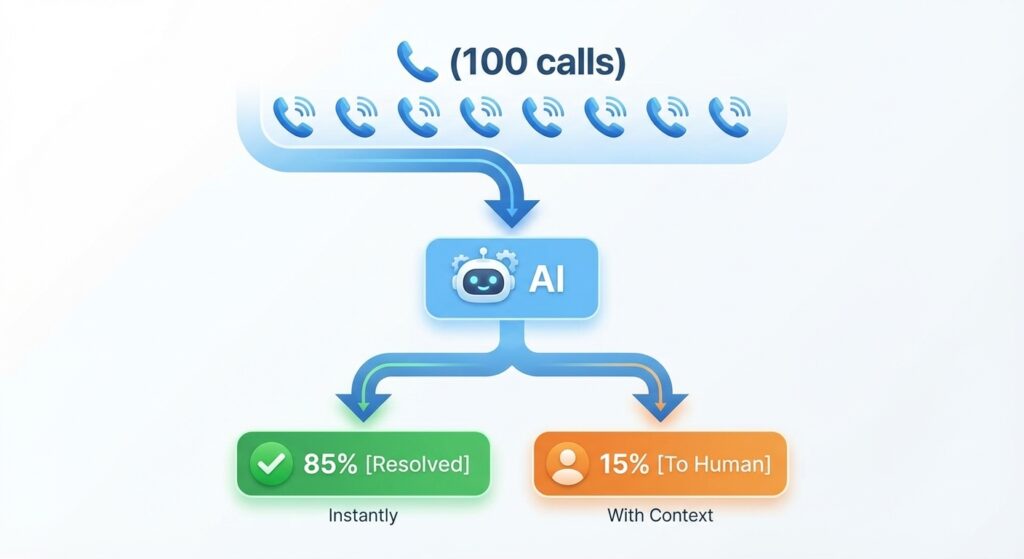
Good voice AI recognizes its own limitations. When a conversation goes beyond what it can handle competently, it doesn’t fumble through. It transfers smoothly to a human agent—but here’s the key part—with complete context already documented.
The human picks up knowing exactly what’s been discussed, what the customer needs, and why the AI made the handoff. No more “can you start from the beginning?”
Learning From Every Call
These systems improve continuously. They analyze patterns across thousands of conversations, identify what works, and optimize responses over time.
Common questions that used to trip up the AI? It learns to handle them. Phrases customers use that weren’t in the original training? It adapts. Your voice AI six months from now will be noticeably better than it is today.
Analytics That Drive Decisions
Every conversation generates data. Smart platforms turn that into actionable insights:
- When do most calls come in? (Staff accordingly)
- What questions keep repeating? (Update your FAQ or website)
- Where do conversations break down? (Fix those friction points)
- Which issues actually need humans? (Train your team there)
This isn’t vanity metrics. It’s operational intelligence that directly improves how you serve customers.
“But Will This Work For My Business?”
Fair question. The answer depends less on your industry than you might expect.
Healthcare organizations use voice AI for appointment scheduling, prescription refill requests, test result inquiries, and initial symptom screening. The system knows when something sounds urgent and escalates appropriately.
Hospitality businesses handle reservations, check availability in real-time, answer property questions, and manage booking modifications—all without putting callers on hold.
Financial services firms automate account inquiries, payment processing, and routine transactions while routing complex financial questions to qualified advisors.
Educational institutions manage enrollment inquiries, schedule campus visits, answer program questions, and handle administrative requests.
The pattern? High-volume, repetitive interactions that follow somewhat predictable paths. These are perfect for automation. Edge cases and emotionally charged situations stay with humans.
Getting Started Without Getting Burned
Implementation doesn’t have to be a nightmare. But it does require some strategic thinking upfront.
Pick Your Battles First
Don’t try to automate everything at once. Start with the calls that make the most sense:
- Appointment scheduling and confirmations
- Basic information requests (hours, locations, pricing)
- Order and delivery status updates
- Payment reminders and simple transactions
- Feedback collection and surveys
These have clear patterns, predictable responses, and high volumes. They’re also the calls that tend to frustrate staff the most.
Keep Humans Where They Shine
Some interactions shouldn’t be automated, at least not fully:
- Complex problem-solving requiring creativity
- Emotionally sensitive situations needing genuine empathy
- Negotiations and conflict resolution
- High-value relationship management
- Anything requiring professional judgment
The goal isn’t replacing human connection. It’s protecting it by removing the repetitive noise that crowds it out.
Plan for Integration
Your voice AI needs to talk to your other systems. Before selecting a platform, map out:
- Which databases need to be accessible?
- What actions should the AI be able to take?
- Where does customer information currently live?
- What security and compliance requirements apply?
The best conversational AI in the world is useless if it can’t access the information customers are actually calling about.
The Security Question
Enterprise voice systems handle sensitive information. Full stop.
Any platform worth considering should offer:
- End-to-end encryption for all conversations
- Compliant data storage meeting your regulatory requirements
- Granular access controls for system management
- Complete audit trails for compliance verification
- Regular security assessments and updates
Healthcare organizations need HIPAA compliance. Financial services require specific data handling protocols. Whatever regulations apply to your business, your voice AI platform needs to meet them.
Don’t take vendor claims at face value here. Ask for documentation. Request security certifications. This isn’t an area where “trust us” is good enough.
What’s Coming Next
Voice AI is moving fast. Capabilities that seemed futuristic two years ago are standard features now. Here’s what’s on the horizon:
Emotion recognition that goes beyond detecting frustration to understanding subtle emotional states and responding appropriately.
Predictive conversations that anticipate caller needs based on their history, time of contact, and contextual signals.
Multi-modal interactions seamlessly combining voice, text, and visual elements as customers move between channels.
Advanced biometrics for voice-based identity verification, eliminating security questions and PINs.
Organizations building expertise now will have significant advantages as these capabilities mature. The learning curve exists whether you start today or in two years—might as well start climbing.
Making the Call
Implementing voice AI isn’t trivial. It requires investment, integration work, and organizational change management. But the math increasingly favors action over inaction.
Consider your current reality:
- How many calls go unanswered or abandoned?
- How much time does your team spend on repetitive inquiries?
- What’s your after-hours coverage costing you—in staffing or missed opportunities?
- Can your current setup handle your growth plans?
If these questions make you uncomfortable, that discomfort is information. It’s telling you something about where your customer experience stands relative to expectations.
Voice AI won’t solve every problem. But for the right use cases—high-volume, pattern-based interactions where speed and consistency matter—it’s becoming less of a competitive advantage and more of a baseline expectation.
The businesses figuring this out now are building capabilities their competitors will be scrambling to match in a few years. That’s not hype. That’s just how technology adoption curves work.
Ready to See What’s Possible?
We’ve helped organizations across industries transform how they handle customer conversations. Not with magic—with practical voice AI that actually works in production environments.
If you’re curious whether this makes sense for your situation, let’s talk. No pressure, no hard sell. Just an honest conversation about what voice AI can and can’t do for businesses like yours.
Explore Vexyl AI Voice Solutions
Have questions about implementing voice AI? Drop us a line. We genuinely enjoy these conversations—even the skeptical ones.